
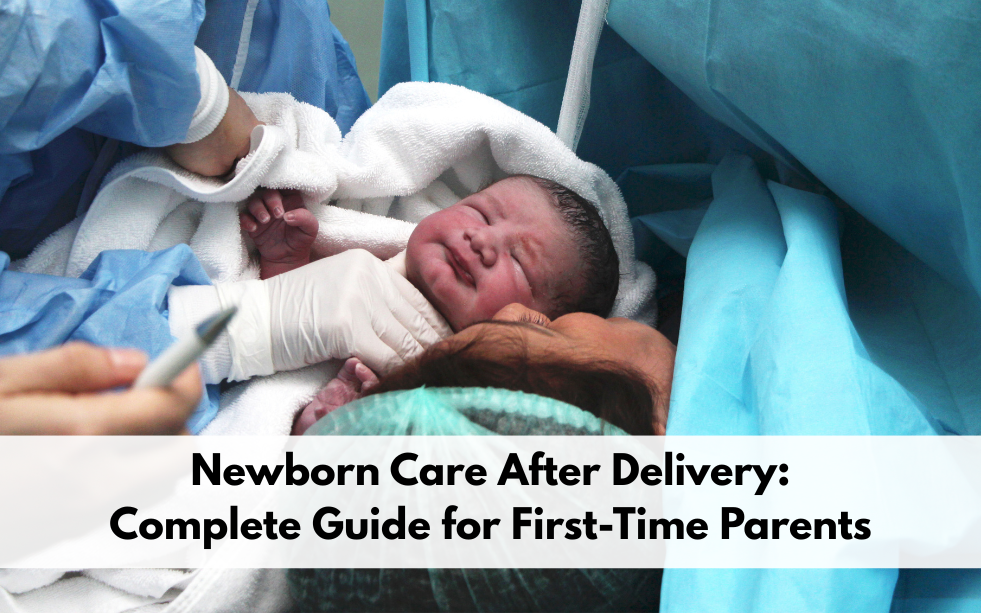
Welcoming a newborn into the world is an extraordinary experience, filled with immense joy and, let’s be honest, a fair share of “what do I do now?” moments. For first-time parents, the shift from pregnancy to parenthood happens in the blink of an eye. Understanding the essentials of Newborn Care After Delivery is crucial for ensuring your little one’s health and your own peace of mind during those first few weeks.
At Tirsa Healthcare, we believe that informed parents are confident parents. This guide breaks down the critical aspects of neonatal care, from the delivery room to your first month at home.
The Golden Hour: Immediate Care Post-Birth
The first hour after birth is often called the “Golden Hour.” During this time, healthcare professionals perform several routine but vital procedures:
- Skin-to-Skin Contact: Placing the baby on the mother’s chest helps regulate the infant’s body temperature, heart rate, and breathing while promoting emotional bonding.
- The Apgar Score: This is a quick test performed at 1 and 5 minutes after birth to check the baby’s heart rate, muscle tone, and other vital signs.
- Initial Feeding: Whether breastfeeding or bottle-feeding, the first feeding usually happens within this hour. For breastfeeding mothers, the “liquid gold” known as colostrum provides essential antibodies for the baby’s immune system.
Essential Daily Care Routines
Once you transition home, the real journey of Newborn Care After Delivery begins. Here are the pillars of daily maintenance:
1. Feeding and Hydration
Newborns have tiny stomachs and need to eat frequently—usually every 2 to 3 hours.
- Watch for Cues: Don’t wait for crying. Look for lip-smacking, rooting (turning the head toward the breast or bottle), or sucking on hands.
- Monitor Output: A well-fed baby typically has 6 to 8 wet diapers and at least one bowel movement every 24 hours.
2. The Art of Safe Sleep
Sudden Infant Death Syndrome (SIDS) is a primary concern for new parents. To ensure safety:
- Back is Best: Always place your baby on their back to sleep on a firm, flat surface.
- Clear the Crib: Keep the sleeping area free of pillows, blankets, toys, or bumpers.
- Room Sharing: It is recommended to keep the baby’s crib in your room for the first six months, but never share the same bed.
3. Hygiene and Umbilical Cord Care
Your baby’s skin is incredibly delicate.
- Bathing: Skip the tub until the umbilical cord stump falls off (usually 1–3 weeks). Stick to “sponge baths” with lukewarm water.
- Cord Care: Keep the stump clean and dry. Avoid covering it with the diaper; fold the top of the diaper down to let air reach the area.
- Handling: Always wash your hands before touching your newborn, as their immune system is still developing.
Recognising “Red Flags”
While most issues are minor, parents should know when to seek medical attention immediately. Contact a paediatrician if you notice:
- A rectal temperature of $100.4^{\circ}F$ ($38^{\circ}C$) or higher.
- Persistent lethargy or difficulty waking the baby for feeds.
- Yellowing of the skin or eyes (Jaundice).
- Redness, pus, or a foul odour around the umbilical cord stump.
Support at Tirsa Healthcare
At Tirsa Healthcare, we understand that the postpartum period can be overwhelming. Our specialised Nursery & Newborn Care services in North Delhi are designed to support both the infant and the parents. From advanced NICU facilities for high-risk newborns to lactation support and routine vaccinations, we provide a 24/7 safety net for your growing family.
Recent Comments