
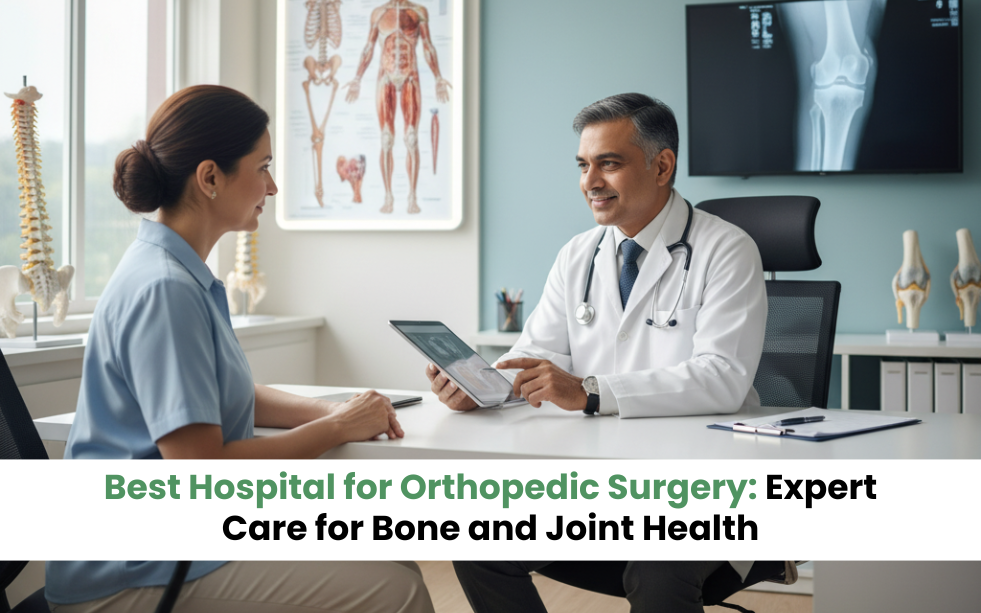
Bone and joint health plays a central role in living an active, pain-free life, whether in youth, middle age, or the golden years. The body’s musculoskeletal system — the bones, joints, ligaments, tendons and muscles — supports movement, posture, and strength. When there is injury, degeneration, or congenital structural issues, orthopedic surgical care becomes essential. But what defines the “best hospital” for orthopedic surgery? What qualities matter most? And how does one make an informed decision? If “Laparoscopic Hospital Near Me” is part of your search terminology, you may be seeking hospitals known for minimally invasive procedures; even in orthopedics, many centers now offer arthroscopic, keyhole, and other refined techniques. Tirsa Healthcare in North Delhi offers promising answers to all of these considerations.
Why Expert Orthopedic Surgery Matters
Orthopedic surgery goes beyond fixing broken bones. It involves restoring mobility, relieving pain, improving quality of life, and preventing future complications. When bones, joints or supporting structures are damaged, delayed or suboptimal treatment can lead to chronic pain, restricted movement, or even deformity. Expert care ensures:
- Accurate diagnosis of musculoskeletal conditions
- Use of modern imaging (MRI, CT, X-ray) to map injury or disease precisely
- Use of advanced surgical techniques, including minimally invasive ones, to reduce tissue damage
- Post-operative rehabilitation for optimal recovery
For many people, including those searching for Laparoscopic Hospital Near Me, knowing that a hospital also performs minimally invasive, arthroscopic or keyhole surgery adds confidence that the facility stays up-to-date with global standards.
Important Qualities in a Top Orthopedic Hospital
When evaluating hospitals for bone and joint surgical care, these factors distinguish the best from the average:
- Highly Skilled Orthopedic Surgeons & Subspecialists
Expertise in trauma, joint replacement (hip, knee, shoulder), sports injuries, spine surgery, pediatric orthopedics, foot and ankle, etc. Surgeons who are trained, board certified or equivalent, with experience in both open and minimally invasive/arthroscopic techniques. - Modern Surgical Facilities & Equipment
State-of-the-art operating theatres, clean air, proper lighting, reliable instrumentation for joint replacement and reconstruction. Use of imaging guidance, minimally invasive tools, and technologies like navigation or robotic assistance where available. - Comprehensive Diagnostic Capabilities
On-site imaging: digital X-ray, MRI, CT scan, ultrasound. Laboratory support. Pre-operative evaluation facilities. - Pre-operative Care & Planning
Assessment of patient’s overall health status, management of comorbidities such as diabetes, cardiovascular disease; ensuring patient is optimized before surgery to reduce risk. - Post-operative Recovery & Rehabilitation Services
Physical therapy, occupational therapy, pain management, wound care, mobility assistance. A hospital that supports rehabilitation aggressively usually yields better outcomes in orthopedic surgery. - Safety, Sterility & Infection Control
Orthopedic implants (joint prostheses, plates, screws) are particularly sensitive to infection. Strict protocols for sterilization, clean OT (“operating theatre”) environments, antibiotic stewardship are central. - Patient-Centric Comfort and Transparency
Clear communication about risks, alternatives, expected outcomes and recovery time; empathy throughout the process; accommodations, nursing care, cleanliness; structured follow-ups. - Accessibility and Proximity
While quality matters most, having a hospital near your home or region reduces travel burden, particularly for follow-ups and rehab. If you search for Laparoscopic Hospital Near Me, you may also value orthopedic centers that are accessible and deliver minimally invasive options locally. - Cost Efficiency & Insurance Support
Transparent billing, provision of estimates, acceptance of insurance/cashless facilities, cost-effective choices without compromising quality.
Tirsa Healthcare: Why It Qualifies as One of the Best Orthopedic Surgery Hospitals
Tirsa Healthcare, located in Derawal Nagar, North Delhi, meets nearly all of the benchmarks for orthopedic excellence. Here is how Tirsa exemplifies what people should look for when deciding on orthopedic care.
Skilled Orthopedic Specialists
At Tirsa Healthcare, the orthopedic department is staffed with doctors who are specialized in bone, joint and musculoskeletal care. They manage trauma, joint issues, congenital conditions, and degenerative problems. Their proficiency in both standard orthopedic surgery and refined minimally invasive techniques aligns with what patients expect when searching for Laparoscopic Hospital Near Me.
High-quality Infrastructure
Tirsa Healthcare possesses modern, modular operation theatres. This ensures high standards of sterility, optimal air circulation, and controlled environments essential for minimizing infection risk, especially when implants are involved. The hospital’s diagnostic wing includes imaging modalities necessary for precise assessment — a fundamental requirement for planning a joint replacement or corrective surgery.
Thorough Pre-operative Workup
When you consider Tirsa, you find that patient evaluation includes overall health checks, imaging, laboratory investigations, and consultation across relevant departments (anesthesia, internal medicine, etc.). These efforts reduce surgical risk and help plan the procedure more accurately.
Minimally Invasive & Arthroscopic Options
Orthopedic care at Tirsa doesn’t stay limited to traditional open surgery. The hospital offers arthroscopic and keyhole techniques for many joint issues (knee, shoulder, ACL, meniscus, etc.), which align closely with the modern patient’s desire to recover fast, have less pain, and retain mobility sooner. Though the term “laparoscopic” usually applies to intra-abdominal surgery, when people type Laparoscopic Hospital Near Me, they frequently include hospitals offering arthroscopic and minimally invasive orthopedic surgeries in their search; Tirsa meets that broader need.
Post-operative Rehabilitation and Support
Tirsa ensures that after the surgical procedure, there is strong emphasis on physical rehabilitation. In orthopedic surgeries, the role of physiotherapy and gradual mobilization is crucial. Tirsa Healthcare supports patients with trained physiotherapists, rehabilitation plans, mobility aids, wound care, and pain management protocols. These features help patients return to mobility and everyday life more efficiently.
Safety and Cleanliness Standards
Given the stakes in orthopedic surgery — implants, risk of deep infection, risk of complications — Tirsa’s modular operating theatre, sterilization processes, cleaned wards, strict infection control protocols, and overall safety culture are particularly important.
Patient Comfort & Communication
Tirsa Healthcare offers compassionate care. Patients are guided through what to expect, informed about possible risks, plan for recovery, stay in touch for follow-ups. This sense of openness builds trust. Clean wards, caring staff, swift support add to a comfortable surgical experience.
Accessibility and Local Value
For residents of Delhi and nearby regions, having a hospital with these capabilities locally means less travel, lower logistic hurdles, and more consistent follow-up. When someone searches Laparoscopic Hospital Near Me, what often matters is proximity and quality. Tirsa combines both.
Cost Transparency and Support
Tirsa Healthcare provides clear services listed, visible contact information, diagnostic services in-house, and assists in arranging necessary pre-operative and post-operative facilities. Though orthopedic surgeries involving implants can be expensive, Tirsa’s model aims to balance cost with quality, to make expert care accessible.
Processes in Orthopedic Surgery at a High-Performance Hospital
While every hospital follows its own protocols, high-performance ones like Tirsa generally follow these process steps:
- Detailed consultation with an orthopedic surgeon, with imaging and tests to confirm diagnosis.
- Planning of surgery: choice of surgical technique—open vs arthroscopic/minimally invasive vs joint replacement; selection of implants/tools.
- Anesthesia & patient optimization: medical clearance; ensuring patient is fit to undergo surgery.
- The surgery itself carried out under sterile conditions with modern instruments.
- After surgery, monitoring in recovery; pain managed using multimodal analgesia; immediate efforts to begin mobilization.
- Rehabilitation: structured physical therapy; mobilization; strengthening; gradual return to daily and occupational activities.
- Follow-up for wound healing, implant stability (in joint replacements), functional outcomes.
Orthopedic Conditions Treated with Advanced Surgical Care
Orthopedic surgery encompasses many conditions. In a top hospital, you’ll see treatment for:
- Joint degeneration (arthritis) requiring joint replacement: hip, knee, shoulder
- Sports injuries affecting ligaments, tendons, cartilage: ACL tears, rotator cuff tears, meniscal damage
- Trauma: fractures of long bones, pelvis, complex joint fractures
- Spine-related surgeries: disc herniation, spinal stenosis, deformities
- Pediatric orthopedics: congenital bone, joint disorders in children
- Foot and ankle surgery: reconstructive procedures, deformities like flatfoot, bunions
- Revision surgeries: correcting or replacing failed implants or surgeries
When choosing a hospital, verify that the surgeons have experience in your specific area, because some centers are stronger in joint replacement, others in sports-injury surgery, etc.
Comparing Open vs Minimally Invasive Orthopedic Surgery
Open surgery involves larger incisions and more tissue disruption. Minimally invasive or arthroscopic surgery uses smaller incisions, specialized tools, and cameras. Advantages of minimally invasive orthopedic surgeries include:
- Reduced soft tissue damage
- Less postoperative pain and swelling
- Shorter hospital stay and faster recovery
- Smaller scars and better cosmetic results
- Earlier return to function
However, such techniques require specialized equipment, surgeon skill, and well-controlled facilities. That is why when seeking a hospital, especially under searches like Laparoscopic Hospital Near Me, you must ensure that the hospital offers true minimally invasive or keyhole/arthroscopic approaches, not just promises.
Considerations to Take into Account Before Choosing
Even when a hospital matches many criteria, as a patient you should evaluate:
- The surgeon’s experience with your particular condition and type of surgery
- The hospital’s track record: infection rates, implant failure rates, re-operation rates
- Rehabilitation availability and quality
- Expected recovery time vs your personal schedule and life demands
- Overall cost, including implants, hospitalization, physiotherapy, etc.
Tirsa Healthcare, given its infrastructure and services, comes across as one that addresses these concerns widely for those in and around Delhi.
The Role of Minimally Invasive Techniques in Orthopedics and How They Relate
While “laparoscopic” more often refers to abdominal surgery, in orthopedics the analogous techniques are arthroscopic surgery and other minimally invasive methods. Some people searching for Laparoscopic Hospital Near Me are unaware of the precise terminology, but seek hospitals that offer minimally invasive surgical options generally. Tirsa Healthcare, while explicitly listing laparoscopic surgery among its core services, also maintains the technological and surgical culture to support arthroscopic and minimally invasive orthopedic techniques. This overlap is valuable for patients seeking lower-pain, shorter-hospital stay solutions.
Why Tirsa Healthcare Stands Out
Putting together all the features, Tirsa Healthcare emerges as one of the best options for orthopedic surgery in Delhi area because:
- Modern infrastructure (modular operating theatre, sterilization, diagnostic labs)
- Qualified orthopedic surgeons capable of both routine and advanced procedures
- Availability of minimally invasive and arthroscopic orthopedic surgery options
- Strong postoperative and rehabilitation support
- Patient comfort, transparent communication, accessibility
- Competitive cost structure, with local accessibility reducing travel burden
Preparations for Orthopedic Surgery: What to Expect
Preparing yourself adequately can influence outcomes significantly. Patients considering orthopedic surgery at a hospital like Tirsa should plan:
- Ensuring general health is optimized: controlling chronic conditions like diabetes or hypertension
- Preoperative diagnostics & imaging done in timely fashion
- Clearing any contraindications (e.g. infection elsewhere, nutritional deficiencies)
- Arranging for post-surgery help: family or caregiver support, arranging transport, mobility aids
- Understanding the rehabilitation plan, what physical therapy will be needed
A hospital committed to excellence will guide patients through all these steps clearly.
Patient Recovery and Long-Term Outcomes
Orthopedic surgery success is measured not only by how the operation goes but by how well a patient recovers in the longer term. Key points include:
- Early mobilization to avoid stiffness and strengthen muscles
- Adherence to physical therapy and exercises
- Watching for signs of complications: swelling, pain, wound issues
- Maintaining realistic expectations: joint replacement may restore mobility and reduce pain, but may not replicate “brand new” joints.
A hospital with comprehensive follow up, such as Tirsa Healthcare, can help patients set these expectations and support them through recovery.
The Impact of Choosing the Best Hospital
Opting for a hospital with high standards for orthopedic surgery affects outcomes significantly. When things are done right: less risk of infection; implants last longer; mobility returns sooner; less lifelong discomfort; fewer revisions or reoperations. Conversely, subpar facilities or inexperienced surgeons can lead to complications, slower recovery, worse scars, implant failure, or persistent pain.
Thus, leveraging searches like Laparoscopic Hospital Near Me may serve as an entry point for many patients, but the deeper evaluation of orthopedic capability is essential.
Conclusion
Bone and joint health is precious. When the need arises for orthopedic surgical care, choosing a hospital with excellence in infrastructure, surgeon skill, minimally invasive capabilities, rehabilitation, safety, and patient comfort can make all the difference. Tirsa Healthcare in North Delhi exemplifies many of the features that one should seek in the best hospital for orthopedic surgery. Its combination of modern operating theatres, diagnostic facilities, expert orthopedic specialists, minimally invasive options, and strong postoperative care positions it as a top choice in the region.
If you are considering orthopedic surgery — whether for joint replacement, sports injury repair, fracture stabilization, or other bone and joint issues — take the time to evaluate hospitals deeply. Use proximity (such as Laparoscopic Hospital Near Me) as one factor, but give priority to quality in all other dimensions. Tirsa Healthcare offers that balance of being relatively local while also being comprehensive and high standard, making it a wise option to explore.